


Defending Maine’s Lakes from Aquatic Invaders

This article was originally published by Josie Miller, Invasive Aquatics Coordinator at 7 Lakes Alliance in the Fall 2025 issue of The Conservationist and is reproduced here with permission. Read the original article here.
The first record of an invasive aquatic plant in Maine was variable-leaf milfoil in Sebago Lake in 1970. Since then, eight invasive aquatic plant species—including variable-leaf milfoil and curly-leaf pondweed—have spread to 38 Maine waterways.
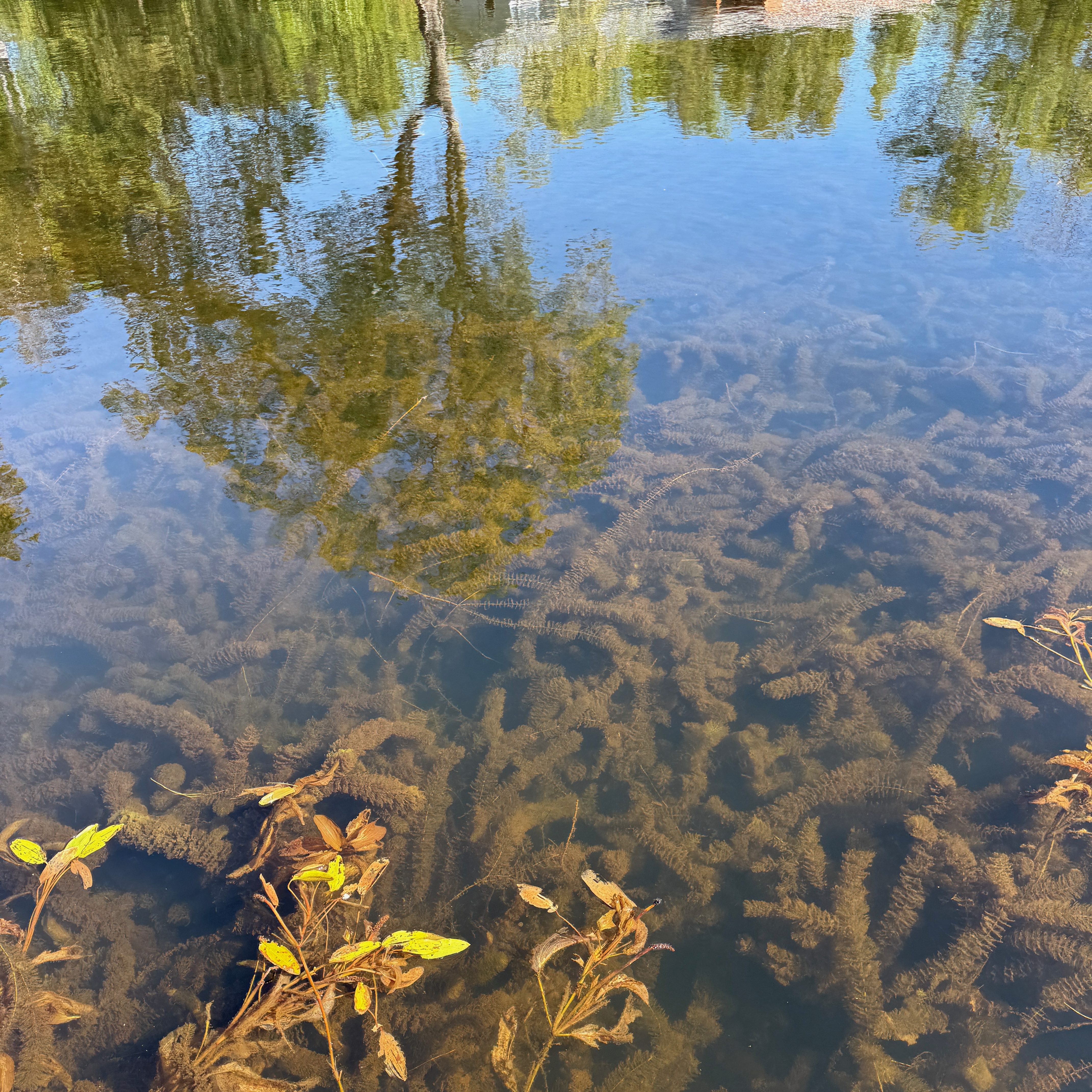
Variable-leaf milfoil was introduced to the Belgrade Lakes watershed in the early 1990s in Belgrade Stream, which connects lower Long Pond to Messalonskee Lake. To address this important issue, 7 Lakes Alliance, the Maine Department of Environmental Protection, and Friends of Messalonskee have recently partnered to expand and intensify remediation efforts—work that will continue over the next several years. Already this work is showing success. Since the increased effort began in June 2025, the number of milfoil fragments leaving boats from the Oakland boat launch on Messalonskee Lake has dropped substantially.
These invasive plants harm native species, reduce water quality, hinder recreation, and lower property values. Thick milfoil mats make swimming, fishing, and boating difficult—and they are costly to manage. In dense infestations such as Belgrade Stream, herbicide applications are often the only viable control method as hand removal is not sustainable for large infestations.


The primary pathway of spread is plant fragments hitchhiking on boats and gear. To combat this, Maine launched the Courtesy Boat Inspection (CBI) Program in 2001. The numbers of inspections statewide have grown from 2,848 in 2001 to 91,612 in 2024. 7 Lakes Alliance manages the CBI program at all motorized boat launches in the watershed from May to October; in 2025, a team of about 50 inspectors checked 14,680 boats. Over the last five years, CBIs in the Belgrade Lakes watershed have prevented 64 potential infestations, including 61 fragments intercepted from boats leaving Messalonskee Lake alone.
Because CBIs cannot inspect every boat, education is essential. Inspectors teach boaters how to check their own gear, and 7 Lakes Alliance hosts workshops to train volunteers to identify invasive plants and survey for new threats through the Adopt-a-Shoreline program.

As invasive species continue to spread in Maine, prevention and education remain our strongest tools for protecting the Belgrade Lakes watershed.
Leave a Reply